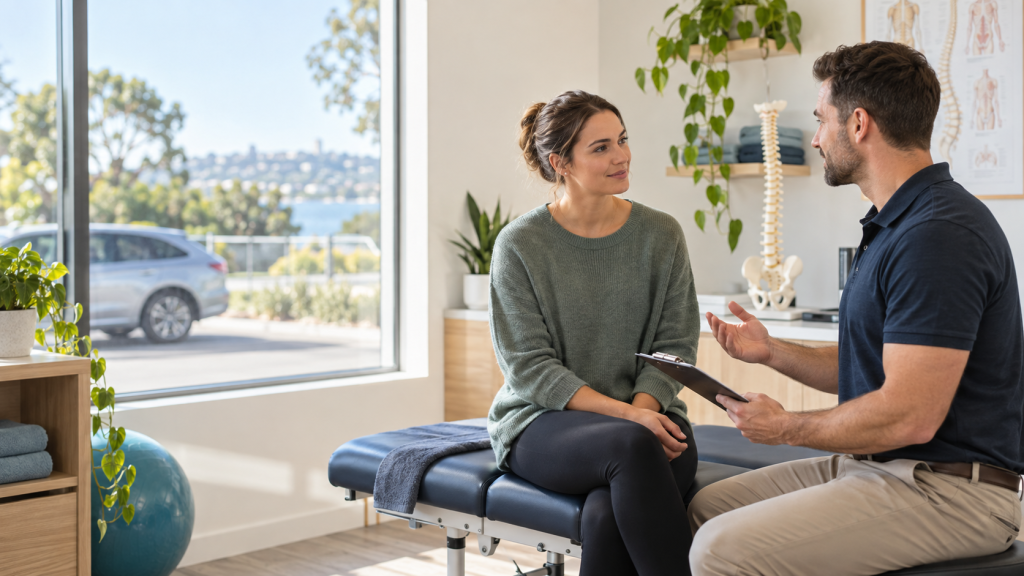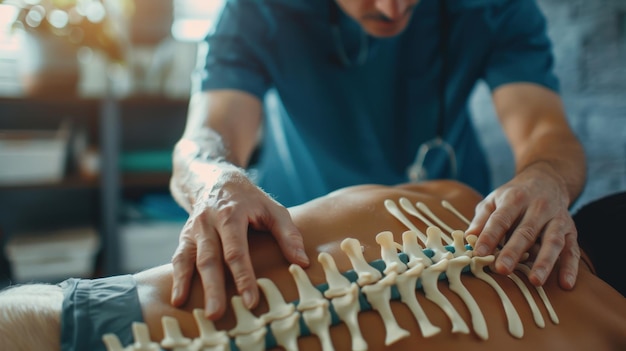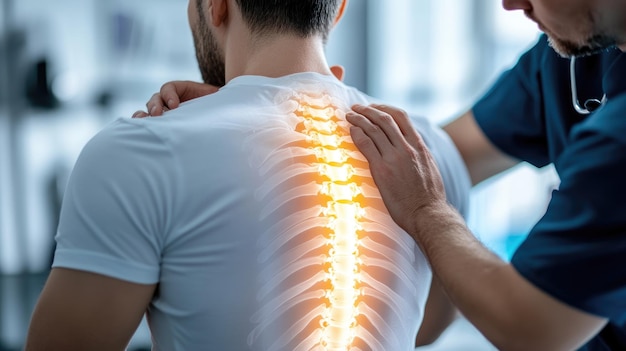


Early warning signs of scoliosis in teenagers are mostly subtle changes in posture rather than pain. Look for uneven shoulders or hips, ribs more prominent on one side, clothes hanging crooked, or a rib hump when your child bends forward. Noticing these patterns early allows timely assessment and gentle, mostly non-surgical care.
Introduction
Scoliosis in teenagers can creep up quietly, with little or no pain, while the spine is still growing fast. Parents often only notice it when a school photo or sports uniform suddenly looks “off”. By then, the curve may already be larger than it appears.
This matters because bigger curves are harder to control and may keep progressing during growth. According to the Royal Children’s Hospital Melbourne, about 2 to 3 in every 100 young people develop a measurable curve, although most are mild.
This article explains what scoliosis in teenagers means, the early scoliosis warning signs to watch for, how scoliosis diagnosis in teenagers works in Australia, and the main treatment options. You will also see how Spinal Care in Sydney works alongside GPs and specialists to support non-surgical scoliosis treatment for teenagers.
If you have even a small concern about your child’s posture, the next sections show what to look for and when to book a spinal check rather than waiting.
Key Takeaways
-
Early Warning Signs Are Mostly Visual, Not Painful
Early signs of scoliosis in teenagers usually show up as uneven shoulders, ribs, waist or hips, or clothes sitting crooked. Many teenagers with a curved spine feel fit and active, so pain is not a reliable early clue. Regularly looking at posture from behind and during a forward bend is very helpful. -
When To Seek A Professional Scoliosis Assessment
Any persistent asymmetry, rib hump, or family history of adolescent scoliosis is a good reason to see a GP or spinal clinician. Sudden changes during a growth spurt deserve extra attention, especially in girls. If red flag symptoms appear, a prompt medical review is needed rather than simple reassurance. -
What To Expect From Diagnosis And Monitoring
Diagnosis usually involves a physical check, a standing spinal X-ray, and measurement of the Cobb angle. Doctors then review how much growth is left, often using Risser staging. Mild curves are usually checked every few months while the child is growing to see whether the spinal curvature progresses. -
Evidence-Based Treatment Options For Teenagers
Most curves only need monitoring and exercise, while moderate, progressive curves may need a scoliosis back brace for teens. Surgery is reserved for larger or rapidly worsening curves, often over about 45 to 50 degrees. Research in the New England Journal of Medicine shows bracing can lower the chance of reaching surgical range. -
How Spinal Care Supports Non-Surgical Management In Sydney
Spinal Care offers structured spinal assessment, digital X-rays when appropriate, AI-assisted posture scans and gentle, age-appropriate chiropractic care. The team works in with GPs, orthopaedic surgeons and physiotherapists, and uses functional rehabilitation programs to support posture, strength and long-term comfort for teenagers and their families.
“The earlier scoliosis is picked up, the more options we have to manage it conservatively.” — Adapted from guidance by Scoliosis Australia
What Is Scoliosis In Teenagers And Why Does Early Detection Matter?
Scoliosis in teenagers describes a sideways curve and twist of the spine that develops during the growth years. Early detection matters because curves may progress quickly while bones are still maturing, and small curves are far easier to manage than large ones.
Understanding Adolescent Idiopathic Scoliosis
Adolescent idiopathic scoliosis is the most common form of spinal curvature in teenagers, appearing between about 10 and 16 years of age. The spine bends sideways and rotates, so ribs or waist on one side stick out further. On X-ray, doctors measure this curve with the Cobb angle to see how large it is.
Idiopathic simply means the cause is unknown, although genetics and growth patterns seem to play a part. According to the Scoliosis Research Society, about 2 to 3 percent of adolescents have a curve of at least 10 degrees, and most of these are mild. Curves often sit in the upper back bending to the right, the lower back, or both regions as a double curve.
Adolescent scoliosis is different from:
-
Congenital scoliosis – from spinal malformations present at birth
-
Neuromuscular scoliosis – linked with conditions like cerebral palsy or muscular dystrophy
It is not caused by poor posture, school bags, sport or anything a parent or child did wrong, which can reassure many families.
Why Parents Should Not Ignore Early Signs
Parents should not ignore early scoliosis warning signs because mild curves can silently grow while a teenager has growth left. Younger teens with more growth remaining have a higher chance of progression than those near skeletal maturity. Research summarised by SOSORT shows that curves of 20 to 29 degrees in early growth can have more than a 60 percent risk of worsening.
Larger curves:
-
Place uneven load on vertebrae and discs, especially in the lower back
-
May contribute to adult back pain and early disc wear
-
Can, when very severe in the thoracic spine, reduce lung space and affect heart and lung function (though this is now uncommon with earlier care)
-
Often cause cosmetic changes, such as rib humps and uneven hips, which can affect self-esteem during sensitive teenage years
Early detection allows timely referral for bracing when needed, scoliosis-specific exercise programs and close monitoring rather than a late scramble. It also lets clinicians such as those at Spinal Care support posture, muscle balance and spinal comfort long before adulthood. With this kind of early, coordinated approach, most teenagers with scoliosis grow into active adults with few limits.
What Are The Early Warning Signs Of Scoliosis In Teenagers?
The early warning signs of scoliosis in teenagers are mostly visual changes in body symmetry, not dramatic pain. Parents are often the first to spot uneven shoulders, ribs or hips, or notice that clothing no longer hangs straight.
Visible Changes Parents Can Spot At Home
Visible changes in posture give the clearest early clues for scoliosis in teenagers and children. To check at home:
-
Stand And Observe
Ask your teenager to stand in shorts and a singlet, relaxed, with feet together. From behind, look for:-
One shoulder sitting higher than the other
-
One shoulder blade sticking out further
-
The head appearing off-centre over the pelvis
-
-
Check The Waist And Hips
In teenage scoliosis, one waist may be more “nipped in” while the other looks flatter, or one hip may sit higher or more prominent. The whole body may lean subtly to one side, even though the teen insists they are standing straight. These are common adolescent scoliosis patterns. -
Do A Simple Forward Bend Test
Ask your child to stand with knees straight, feet shoulder width apart, then bend forward from the hips with arms dangling and hands together. Watch from behind. If one side of the ribs or lower back rises higher, forming a rib hump, this can be an early sign of scoliosis rather than simple poor posture. -
Notice Clothing And Everyday Clues
Clothing often provides extra hints before anyone mentions a curved spine in teenagers. You might see:-
Skirt hems or short legs sitting unevenly
-
T-shirt necklines twisting or gaping on one side
-
One backpack strap always feeling tighter
-
Sometimes a school nurse, sports coach or dance teacher notices these subtle changes and suggests a check, which is worth following up.
Pain, “Growing Pains” And Red Flag Symptoms
Many teens with scoliosis have little or no pain, especially when curves are small, so absence of pain does not rule scoliosis out. Backache is common in teenagers generally and often relates to sport, sitting or stress rather than a spinal curve. Pain alone, without visible asymmetry, is rarely caused by scoliosis in kids in Australia.
That said, some patterns of pain should never be brushed off as simple “growing pains”. According to Healthdirect Australia:
-
Constant back pain
-
Pain that wakes a child at night
-
Pain in children under about 10 years
all deserve medical review. Pain that stops a child playing sport or returning to activity also needs attention.
Red flag symptoms include:
-
A rapidly worsening visible curve
-
A progressive rib hump
-
New neurological signs such as leg weakness, numbness or changes in bladder or bowel control
-
Unusual skin marks over the spine, like birthmarks, dimples or tufts of hair
At Spinal Care, any of these findings leads to prompt referral to a GP, paediatrician or scoliosis specialist in Australia for further imaging and medical investigation.
How Is Scoliosis Diagnosed And Screened In Australian Teenagers?
Scoliosis diagnosis in teenagers starts with a careful history and physical examination, followed, when needed, by standing spinal X-rays. In Australia, this pathway often begins with a school screening program, a GP visit or a parent noticing asymmetry at home.
From School Screening Or GP Visit To Specialist Assessment
In some states, scoliosis screening programs run through schools, especially for girls in early high school. Nurses or trained volunteers perform a brief posture check and forward bend test, then send a letter home if they notice signs of scoliosis in children. In other areas, detection often comes from a GP during a routine visit, or from concerned parents.
Once scoliosis is suspected, the clinician takes a detailed history, including:
-
Family history of scoliosis
-
Recent growth spurts and height changes
-
Usual sport and activity levels
-
In girls, the age at first period
They ask when the posture change was first noticed and whether it has changed over months. Any back pain, leg pain or neurological symptoms are recorded carefully.
The physical examination typically includes:
-
Viewing the teenager from the back, side and front to assess shoulder, rib, waist and pelvic alignment
-
A forward bend test to check for a rib or lumbar hump
-
A leg length check to help rule out a simple leg length difference
-
Basic neurological checks of reflexes, power and sensation to exclude nerve compression or neuromuscular causes, particularly in younger children
If the curve looks structural or significant, the GP or chiropractor refers to a paediatrician or orthopaedic specialist. In many Australian centres, care becomes a shared effort between the GP, specialist, physiotherapist, chiropractor and orthotist. Clinics like Spinal Care often support this team by helping monitor posture, comfort and function over time.
X-Rays, Cobb Angle And Monitoring Growth
Standing whole-spine X-rays are used to confirm scoliosis and measure how large the curve is. The teenager stands upright while the radiographer takes images from the front and side, so the whole spinal curvature is visible under load. The Cobb angle is then measured between the most tilted vertebrae above and below the curve.
Typical categories are:
-
Under 10 degrees – not called scoliosis
-
10–20 degrees – mild scoliosis
-
20–40 degrees – moderate scoliosis
-
Over 40 degrees – more severe scoliosis
According to Scoliosis Australia, only a small fraction of young people with scoliosis progress to the point of needing surgery, particularly when curves are picked up early.
To judge progression risk, clinicians look carefully at how much growth remains. They review:
-
Height records and recent growth spurts
-
For girls, how long it has been since menarche, as growth usually slows within about two years after periods start
-
A pelvic X-ray to score Risser stage from 0 to 5, with lower numbers meaning more growth left
Monitoring schedules vary, but mild curves in growing teenagers are often reviewed every 4 to 6 months with examination and occasional repeat X-rays. Australian imaging services apply the ALARA principle, using modern digital systems to keep radiation doses as low as reasonably achievable.
At Spinal Care, diagnostic X-rays and detailed postural scans are used only when clinically justified, supported by AI-assisted posture diagnostics to track subtle change over time.
What Are The Main Treatment Options For Scoliosis In Teenagers?
Scoliosis treatment for teenagers ranges from simple observation and exercises through to bracing and, in a small minority, surgery. Decisions depend on curve size, how much growth is left, whether the curve is progressing and how the teenager feels about their body and daily activities.
Observation, Exercise And Bracing: Non-Surgical First-Line Care
For mild curves, active observation is usually the first step. The teenager returns every few months for checks of posture, height and sometimes repeat X-rays. This watchful approach allows doctors to spot any change in the Cobb angle early, without rushing into bracing when it may not be needed.
Scoliosis-specific exercise programs, such as Schroth-style methods, focus on:
-
Posture correction
-
Trunk muscle balance
-
Breathing control
Systematic reviews in journals like Scoliosis and Spinal Disorders suggest these programs can bring modest improvements in Cobb angle and quality of life, although they are not a guaranteed cure. For many teens, they help build body awareness and confidence while supporting brace treatment.
General sport and physical activity are usually encouraged, not restricted. Adolescents with idiopathic scoliosis often keep playing netball, soccer, swimming or dance, adjusting training only if certain moves cause discomfort. According to the Scoliosis Research Society, normal physical activity does not cause curves to worsen.
Bracing becomes an important non-surgical option for moderate, progressive curves in growing teenagers. A custom-moulded scoliosis brace, often a thoracolumbosacral orthosis (TLSO), is fitted by an orthotist and worn many hours per day. A large trial in the New England Journal of Medicine reported that about 72 percent of braced adolescents avoided curves reaching typical surgical thresholds, compared with 48 percent who did not wear a brace.
Wearing a scoliosis back brace for teens can be challenging at first. It may feel hot, restrict some movements and raise questions about clothing and body image. Helpful strategies include:
-
Good education about why the brace matters
-
Family support with wear-time routines
-
Links with physios or chiropractors who understand bracing and can help with comfort and exercises
Tip: Many families find setting small, realistic daily wear goals and using a simple tracking chart can improve brace consistency without constant conflict.
Surgery And The Role Of Chiropractic And Manual Therapies
Scoliosis surgery in teenagers is reserved for larger curves or those that keep worsening despite bracing. Orthopaedic surgeons generally consider spinal fusion when curves reach about 45 to 50 degrees in a growing child, or when very severe curves threaten lung or heart function. The aim is to straighten and stabilise the spine enough to prevent further progression and improve torso balance.
Spinal fusion usually involves metal rods, screws and bone graft to join selected vertebrae. After healing, the fused section moves less, but the overall posture and appearance are often much improved. Long-term studies reported by the Spine journal show many teens return to school and sport with good function, though some high-impact or extreme sports may need adjustment.
Chiropractic care has a different but still useful role. Current evidence does not support chiropractic treatment alone as a way to straighten adolescent idiopathic scoliosis or stop structural progression. However, gentle manual therapies can:
-
Ease muscle tension
-
Improve joint mobility
-
Support postural awareness
-
Help manage associated back or neck pain
At Spinal Care, chiropractors use low-force methods such as Activator Methods and non-surgical spinal decompression (Spine MT-Core) where appropriate, especially for older teens or adults with disc-related pain. Care is always coordinated with GPs, physiotherapists and orthopaedic surgeons, and chiropractic is offered as part of a broader program, never as a stand-alone cure for the spinal curve.
How Can Spinal Care Help Teenagers With Scoliosis In Sydney?
Spinal Care helps teenagers with scoliosis in Sydney by providing detailed spinal assessment, age-appropriate chiropractic care and structured rehabilitation within an evidence-based, non-surgical framework. The clinics work closely with medical teams, so teenagers receive the right kind of help at the right time.
Spinal Care’s Assessment, Diagnostics And Gentle Treatment Approach
Every new teenage patient at Spinal Care starts with a comprehensive bio-psychosocial assessment, not just a quick spine check. The chiropractor takes a full history, including:
-
Growth patterns and recent height changes
-
Sport and physical activity
-
School demands, study habits and screen time
-
Family history of scoliosis or back problems
Orthopaedic and neurological tests look at range of motion, reflexes, muscle strength and any nerve irritation.
When indicated, Spinal Care uses digital X-rays and detailed postural scans to map spinal alignment accurately. All imaging follows the ALARA principle, so only necessary views are taken and modern low-dose systems are used. AI-assisted posture diagnostics help highlight subtle spinal imbalances that a casual visual check might miss, which can be useful for early scoliosis in teenagers or other postural problems.
Gentle, age-appropriate chiropractic care is central to the clinic’s approach. Spinal Care is certified in Activator Methods, a low-force instrument-based technique that suits developing spines and anxious adolescents. For older teens or adults with disc and nerve-related pain, non-surgical spinal decompression with the Spine MT-Core system may be considered as part of a plan.
Dr George Hardas leads the team and holds a Master of Science in Medicine in Cognitive Behavioural Therapy, alongside research published in the journal Spine. This mix of spinal research and CBT training supports a calm, evidence-based style of care that recognises both physical and emotional aspects of living with a curved spine.
Rehabilitation, Ongoing Support And Accessibility For Families
Rehabilitation at Spinal Care focuses on function and long-term habits rather than quick fixes. Individual exercise programs aim to:
-
Strengthen core and postural muscles
-
Support better alignment and body awareness
-
Help lower the risk of flare-ups in scoliosis-related pain in teenagers
Education often covers:
-
Ergonomics for study and device use
-
School bag choice and packing
-
Screen time posture
-
Simple stretches that fit into busy school days
Once symptoms settle, many teenagers move into preventative wellness programs designed to keep their backs strong. These may include progressive core strengthening, flexibility work and lifestyle guidance that suits study, sport and growth. Parents receive clear explanations so they can support home programs without feeling overwhelmed.
Spinal Care also works to keep care financially accessible. Eligible patients can use:
-
Medicare Chronic Disease Management plans with bulk billing
-
WorkCover arrangements
-
Department of Veterans’ Affairs Gold Card benefits
With clinics in Kogarah Bay and Ingleburn, families across the St George and Macarthur regions can choose the location that fits best.
A strong safety-first approach runs through every visit. If a teenager shows red flags, a rapidly progressing curve, or curve sizes that may need bracing or surgical advice, Spinal Care organises prompt referral to the appropriate scoliosis specialist in Australia. Chiropractic care then continues in support of, not instead of, these medical decisions.
Living With Scoliosis As A Teenager: How Can Parents Support Their Child?
Living with scoliosis as a teenager can feel confronting, especially when braces, body image and fears about the future all mix together. Parents play a key role in helping their child stay active, connected and confident while managing a curved spine.
Sport, School And Everyday Life
For most young people with adolescent scoliosis, sport and daily activity remain not only safe but helpful. Staying active supports:
-
Strong muscles and joint mobility
-
Bone health during key growth years
-
Mental health and social connection
Many teenagers continue their usual sports with minor adjustments based on specialist advice and personal comfort.
If a brace is part of scoliosis treatment for teenagers, parents can help plan how it fits around school sport and training. Some teens wear the brace full-time, taking it off only for high-intensity sessions, while others follow a specific schedule set by the orthotist and specialist. Schools can help by:
-
Allowing extra time to change clothes
-
Providing suitable seating or desk options
-
Supporting participation in sport and PE with reasonable adjustments
At school and home, small practical changes often make life easier, such as:
-
Using lockers to limit bag weight
-
Setting up a supportive study chair and desk
-
Allowing short stretch breaks during homework or gaming
A balanced mix of aerobic activity, strengthening and flexibility work, agreed with the care team, usually serves teenagers with scoliosis well.
Emotional Wellbeing, Body Image And Communication
Emotionally, teenage scoliosis can feel unfair, especially when braces or visible changes affect clothing choices and self-image. Many teenagers worry about what friends will say, whether they will ever need surgery, or if scoliosis will limit future work, pregnancy or sport — concerns that are validated by qualitative research on the Treatment of idiopathic scoliosis and its long-term psychosocial impact on young people who experienced bracing or surgery during adolescence. These feelings are valid and deserve calm, honest discussion.
Parents can support emotional wellbeing by:
-
Listening carefully without brushing worries aside
-
Avoiding comments that focus solely on appearance
-
Encouraging questions during appointments
-
Involving teenagers in decisions about their care where possible
Bringing teenagers into appointments and encouraging them to speak directly with clinicians helps them feel more in control. Resources from groups such as Scoliosis Australia and hospital education pages can also give accurate, teen-friendly information.
Supporting brace wear and exercises works best when parents and clinicians focus on goals, not blame. Celebrating small wins, like consistent wear times or mastering a new exercise, makes a difference.
“Consistency matters more than perfection. Small daily habits often have the biggest impact over time.” — Dr George Hardas, Spinal Care
With modern evidence-based care, including collaboration between medical teams and clinics like Spinal Care, most teenagers with scoliosis go on to live full, active adult lives.
In Summary
Scoliosis in teenagers often begins quietly, with small posture changes that are easy to miss and little or no pain. Regularly checking for uneven shoulders, ribs, waist or hips, and using a simple forward bend test, gives parents a practical way to spot early signs of scoliosis at home.
When concerns arise, a prompt professional assessment allows accurate diagnosis, Cobb angle measurement and an informed plan. For many teenagers, this means observation, exercise programs and normal activity, with bracing used when curves are moderate and still growing. Surgery is kept for the relatively few whose curves become very large or keep progressing.
Families in Sydney can access thorough, non-surgical care through Spinal Care, which combines detailed assessments, gentle chiropractic techniques and functional rehabilitation, all grounded in published research. If you notice possible scoliosis warning signs in your child, booking a spinal assessment rather than waiting can protect their long-term spinal health and confidence.
Book an Appointment
If you’ve noticed uneven shoulders, a rib hump or other possible signs of scoliosis, Book an Appointment for a professional spinal assessment and personalised advice.
Frequently Asked Questions
Question: What Does Scoliosis Look Like In A Teenager?
Scoliosis in a teenager often shows as uneven shoulders, one shoulder blade sticking out, or a waist that looks different on each side. The body may lean slightly, and clothes hang crooked even when adjusted. During a forward bend test, a rib or lower back hump on one side is another important clue.
Question: How Can I Check My Child For Scoliosis At Home Safely?
To check at home, have your child stand upright in light clothing while you look from behind for uneven shoulders, ribs or hips. Then ask them to bend forward with straight knees and relaxed arms, watching for a hump on one side. Any persistent asymmetry should be followed by a GP or spinal clinician assessment.
Question: When Should A Teenager With Scoliosis See A Specialist?
A teenager should see an orthopaedic specialist when an X-ray confirms a curve, especially over about 20 degrees, or when the curve is clearly progressing. Red flag symptoms, large visible deformity or significant distress about appearance also justify referral. Spinal Care can assist with initial assessment and guide timely specialist review.
Question: Does Teenage Scoliosis Always Need A Back Brace Or Surgery?
No, teenage scoliosis does not always need a brace or surgery. Many mild curves simply need regular check-ups and exercise while growth finishes. Bracing is usually reserved for moderate, progressive curves in growing teens, and surgery is kept for larger or rapidly worsening curves. Most teenagers never reach the point of needing an operation.
Question: Can Chiropractic Care Fix A Curved Spine In Teenagers?
Chiropractic care cannot reliably straighten adolescent idiopathic scoliosis or stop structural progression of the curve. However, it can help with back or neck pain, muscle tension, joint stiffness and postural awareness. Spinal Care follows a conservative, research-based approach and works alongside medical teams to support comfort and function rather than claim to cure the curve.
Question: Is It Safe For Teenagers With Scoliosis To Play Sport And Stay Active?
Yes, it is generally safe and helpful for teenagers with scoliosis to keep playing sport and staying active. Normal movement does not make curves worse and supports strong muscles, flexibility and mental health. Only a few very high-impact or extreme sports might need modification, based on advice from the treating specialist and care team.