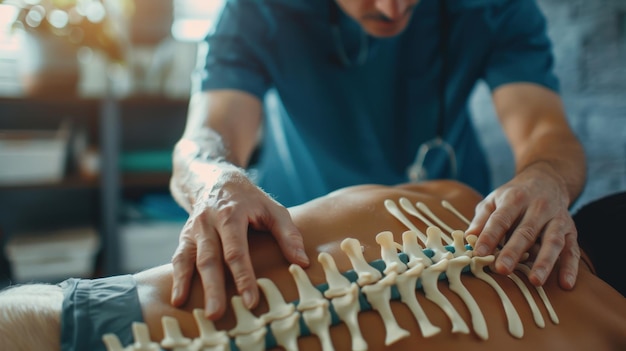


After a crash, a ctp claim chiropractor nsw search usually means you need care and funding answers quickly. Chiropractic treatment may be funded through an approved NSW CTP claim when it relates to the accident, suits your clinical needs, and is considered reasonable and necessary.
A ctp claim chiropractor nsw pathway does not decide fault, compensation, or settlement value. It can, however, support an assessment, treatment plan, active rehabilitation, and records that describe your function. Spinal Care offers clinically guided care for accident-related neck, back, and joint pain.
The sections below explain CTP steps, urgent warning signs, safe care, documentation, and insurer communication.
Key takeaways
CTP funding and clinical care are related, but they are not the same decision. Safe treatment focuses on restoring daily function, not extending visits without a clear reason.
CTP may fund approved chiropractic care, although approval can have limits. Confirm payment arrangements early.
Seek urgent medical care for red flags. Early clinical review records symptoms and guides the next step.
Active rehabilitation should guide recovery. Keep records and invoices, and review progress regularly.
A treating chiropractor can provide clinical information, but cannot determine legal fault or promise a claim outcome.
Table of Contents
- What does a NSW CTP claim cover after a car accident?
- When should you see a chiropractor after a motor accident?
- How can chiropractic care support recovery after an accident?
- What documentation and coordination may support your CTP recovery?
- Choosing a chiropractor for a NSW CTP claim
- In summary
- Frequently asked questions
What does a NSW CTP claim cover after a car accident?
A NSW CTP claim covers personal injuries from a motor accident, rather than vehicle repairs or other property damage. For a ctp claim chiropractor nsw enquiry, treatment funding depends on the injury, the stage of the claim, insurer decisions, and clinical evidence.
Compulsory Third Party insurance may apply to drivers, passengers, pedestrians, cyclists, and motorcyclists injured in NSW crashes. In many cases, the NSW scheme provides statutory benefits for reasonable and necessary treatment and care during the early stages of a claim, even while fault is being assessed. Longer-term benefits, common law damages, and entitlement periods can depend on factors such as fault, injury classification, and the circumstances of the accident.
CTP can assist with medical care, allied health treatment, rehabilitation, imaging, hospital care, and some income-related losses where scheme rules allow. Comprehensive motor insurance is different: it generally deals with car damage, theft, and property loss rather than injury treatment.
Treatment needs a sound link to the accident and a realistic recovery goal. The insurer may ask for a treatment request, referral, progress report, or review before paying for ongoing appointments. Check current fee schedules and payment details on the SIRA page covering fees paid for motor crash health services and confirm requirements with the relevant insurer.
Can a CTP claim pay for chiropractic treatment in NSW?
A ctp claim chiropractor nsw provider may treat an accepted injury when the insurer accepts the care as reasonable and necessary. Funding can include an initial examination, hands-on care, exercise rehabilitation, and clinically needed reports.
Insurers commonly consider:
the likely connection between the accident and current symptoms;
examination findings and functional limits;
the expected benefit of proposed treatment;
whether lower-risk or active options are included;
treatment cost, frequency, and duration; and
measurable changes in daily function.
Approval may cover a set number of visits or a defined period rather than open-ended care. A chiropractor cannot decide who caused the crash, promise claim acceptance, or state what a settlement may be worth.
Treatment funding is a health decision within the claim process. Compensation and legal liability are separate matters.
How to start a CTP claim and request treatment approval
A ctp claim chiropractor nsw request usually starts with prompt medical care and accurate records of the crash. Record symptoms, activity limits, accident details, medical visits, invoices, and written insurer contact.
Identify the relevant CTP insurer, and refer to the current Motor Accident Guidelines for the legislative framework and claims processes that apply, since the correct claim pathway can vary in hit-and-run incidents, uninsured vehicle matters, or accidents involving vehicles registered outside NSW. Lodge the claim as early as practical and seek guidance from SIRA or the insurer if you are unsure where to start.
Provide the clinic with the claim number, insurer contact, GP details, imaging reports, and work restrictions when available. Ask whether chiropractic care needs prior approval, a treatment request, referral, or progress report.
Confirm who pays if treatment begins before approval. Reimbursement is not automatic if the insurer later declines the request.
| CTP insurance | Property insurance |
|---|---|
| May assist with injury-related care | Usually addresses vehicle and property damage |
| May fund approved rehabilitation | Does not usually pay for clinical treatment |
| Requires clinical and claim information | Uses a separate claim process |
| May involve insurer reviews and treatment approvals | Usually focuses on repair or replacement costs |
When should you see a chiropractor after a motor accident?
Seeing a chiropractor after a motor accident can suit some musculoskeletal injuries once serious harm has been excluded. A ctp claim chiropractor nsw search should never delay urgent medical care when symptoms suggest a fracture, head injury, internal injury, or nerve problem.
Pain can appear hours or days after a collision because shock and adrenaline may mask discomfort at first. An early examination creates a useful baseline for pain, movement, strength, nerve signs, sleep, driving, work, and household tasks. It can also show whether a GP, emergency department, or specialist should lead care instead.
A GP review can be particularly helpful after an accident where symptoms are widespread, medication is needed, you have existing health conditions, or work capacity needs to be discussed. Your GP may assess injuries, manage medication, arrange referrals, and coordinate care with other treating practitioners.
Common injuries and symptoms after a crash
A ctp claim chiropractor nsw consultation may examine whiplash, spinal pain, joint pain, and reduced movement after a crash. Whiplash is a sudden acceleration and deceleration neck injury, often linked with rear-end impacts, but it can occur in other collision types.
Common symptoms include neck stiffness, headache linked with neck pain, upper or lower back pain, muscle spasm, and shoulder, hip, or knee discomfort. Tingling, numbness, weakness, poor sleep, driving discomfort, or trouble at work need careful examination. Previous neck or back pain does not rule out a new injury or an accident-related flare.
Research on diagnostic imaging in older adults with low back pain shows that disc bulges and wear-and-tear changes on an MRI do not explain symptoms by themselves. A clinician should interpret scans alongside the history, examination, neurological findings, and functional limits. Many scan findings are common in people without pain, so treatment decisions should not rely on imaging alone.
Which red flags need urgent medical attention?
Urgent medical attention is needed after a crash when symptoms point to a serious injury or worsening neurological problem. A ctp claim chiropractor nsw appointment is not the only response to severe symptoms.
Seek urgent review for suspected fracture, severe or rapidly worsening pain, loss of consciousness, confusion, repeated vomiting, severe headache after head impact, chest pain, or breathing difficulty. New weakness, bowel or bladder changes, saddle numbness, poor balance, or spreading nerve symptoms also need prompt care. Suspected concussion and serious head injury require medical assessment.
Call emergency services if symptoms are severe, sudden, or potentially life-threatening. Do not drive yourself if you feel faint, confused, very drowsy, or unable to move safely.
Spinal Care screens for these warning signs during the initial examination. The clinic may refer you to a GP, emergency department, imaging provider, or specialist when needed.
How can chiropractic care support recovery after an accident?
Chiropractic care after an accident can support safe movement, confidence, and a gradual return to daily tasks. A ctp claim chiropractor nsw plan should use individual goals and regular review, not a fixed series of passive treatments.
Evidence-based care commonly combines education, hands-on options, exercise, and self-management. Manual therapy may reduce pain or stiffness for some people in the short term, but active rehabilitation remains central. The aim is practical function, such as turning your head while driving, sleeping more comfortably, or returning to work duties.
Recovery does not always follow a straight line. It is common for symptoms to vary with sleep, work demands, stress, driving, or a sudden increase in activity. A treatment plan should account for these changes without assuming that every temporary flare means further injury.
What happens at a post-accident chiropractic assessment?
A post-accident chiropractic assessment examines the crash, your symptoms, and your current ability to move safely. A ctp claim chiropractor nsw assessment should also record past injuries, health history, medication, work demands, sleep, and activity limits.
The examination may include observation, range-of-motion testing, orthopaedic checks, and neurological tests of strength, feeling, and reflexes. X-ray or MRI reports may be reviewed, though imaging is not routine for every injury. The ALARA principle means radiation exposure should stay as low as reasonably achievable.
Spinal Care may use digital X-ray access, MRI review, and AI-assisted posture analysis where clinically justified. You should receive a plain-language explanation of the working diagnosis, expected goals, available treatment options, and review points. You can ask questions, decline a proposed treatment, or seek a second opinion at any stage.
Gentle treatment, exercise and graded recovery
Gentle treatment, exercise, and graded recovery can restore movement without asking the body to do too much too soon. A ctp claim chiropractor nsw plan may include joint mobilisation, soft tissue therapy, stretching, education, and individual exercises.
Spinal Care offers low-force options such as Activator Methods and drop-piece tables for acute injuries, anxious patients, older adults, and pregnant women. Rehabilitation may focus on neck movement, core strength, hip and leg control, plus shoulder and upper-back stability. Graded steps can support a return to driving, work, lifting, walking, exercise, and household tasks.
Hands-on care should support active rehabilitation rather than replace it. Non-surgical spinal decompression with the Spine MT Core system may suit selected disc-related injuries, but results vary and it is not suitable for everyone.
| Recovery focus | Practical example |
|---|---|
| Movement confidence | Turning the head safely before changing lanes |
| Strength and control | Lifting shopping with safer trunk and hip control |
| Daily activity | Building up walking or work hours in manageable steps |
| Wider recovery factors | Addressing poor sleep, stress, and driving anxiety |
Fear of movement, stress, sleep loss, and driving anxiety can slow progress. A bio-psychosocial review considers these factors, while CBT-informed strategies can build confidence with safe activity. Where anxiety, low mood, trauma symptoms, or sleep problems are significant, your GP may recommend support from a psychologist or another qualified mental health professional.
What documentation and coordination may support your CTP recovery?
Documentation and coordinated care may support CTP recovery by showing what has changed and why treatment is proposed. A ctp claim chiropractor nsw record should stay factual, clinically relevant, and separate from legal opinions.
Useful records describe the patient’s history, examination findings, working clinical opinion, functional limits, and response to care. With consent, clear communication between a GP, insurer, chiropractor, and other clinicians can reduce duplicate treatment or mixed advice. The recovery plan should guide reports, rather than paperwork driving unnecessary appointments.
Keep copies of invoices, insurer correspondence, certificates of capacity where relevant, and reports supplied to you. If details in a report appear inaccurate, raise the concern promptly with the treating practitioner or insurer.
What may be included in a chiropractic treatment plan or report?
A chiropractic treatment plan or report may explain the injury picture, current function, and reason for proposed care. A ctp claim chiropractor nsw report may include initial findings, a working diagnosis, treatment frequency, home exercises, and review dates.
Useful goals are specific and measurable, such as:
sitting at work for longer;
sleeping with fewer interruptions;
lifting safely;
walking for a set period; or
turning the head while driving with greater comfort and control.
Progress reports can show changes in movement, symptoms, activity tolerance, remaining barriers, and the reason for discharge or more care. Records should clearly separate what you report from what the clinician finds and concludes.
A chiropractor should not state that a crash caused an injury where the available evidence does not support that opinion. Accurate wording supports appropriate clinical care and clear claim communication.
How Spinal Care coordinates care during a CTP claim
Spinal Care coordinates care during a CTP claim through consent-based contact with GPs, insurers, and other treating professionals. This approach keeps recovery goals consistent while recognising that the insurer controls funding decisions.
Care may involve physiotherapists, psychologists, occupational therapists, medical specialists, and rehabilitation providers where needed. Phased planning can move from symptom relief to active care and then self-management, with reviews based on function. The clinic can also explain relevant pathways involving CTP, WorkCover, Medicare Chronic Disease Management plans, and DVA Gold Card arrangements.
A claim should not dictate the length of treatment. Care should reduce, change, or stop when goals are met or further visits no longer offer meaningful benefit.
Choosing a chiropractor for a NSW CTP claim
Choosing a chiropractor for a NSW CTP claim means checking safety, professional registration, fees, and the planned approach to rehabilitation. A suitable provider explains options clearly and reviews whether care is helping.
Look for current registration with the Australian Health Practitioner Regulation Agency, known as AHPRA. Ask whether the provider has experience with motor accident injuries and works with GPs or other clinicians when required. Be cautious if a clinic promises a fixed number of visits before examining you.
Questions to ask before your first appointment
Questions before a first appointment can clarify whether care, funding, and fees suit your situation. Ask whether a ctp claim chiropractor nsw provider needs prior approval and whether direct insurer billing is available.
Also ask about:
gap fees, report fees, and missed-appointment charges;
progress measures and planned review dates;
the likely role of home exercise and self-management;
communication with your GP or other treating clinicians; and
what happens if symptoms worsen or treatment is not helping.
A good plan includes exercise, self-management, and referral when another service is needed. Avoid claims of guaranteed compensation, instant cures, permanent spinal “realignment”, or identical treatment packages for every patient.
Clear answers before treatment can prevent avoidable stress later. Written approval details are useful when insurer payment is involved.
Why Spinal Care may suit post-accident recovery
Spinal Care may suit post-accident recovery because Dr George Hardas focuses on whiplash and trauma-related neck and back injuries. His background includes 10 years of clinical research at the Orthopedic Research Institute at St George Hospital, a Masters in Medicine, and published work in Spine.
The clinic offers thorough examination, low-force care, active rehabilitation, and functional goals. Clinics in Ingleburn, Kogarah, Camden, and nearby Sydney suburbs offer extended hours. Book an examination and confirm CTP funding with both the clinic and insurer.
In summary
Chiropractic care may form part of an approved NSW CTP recovery plan when treatment relates to the crash, suits the clinical findings, and receives regular review. Seek urgent medical care for warning signs, keep accurate records, and choose care that supports safe movement and daily function.
Spinal Care can assess accident-related musculoskeletal pain and explain practical treatment options. Confirm insurer approval and payment arrangements before ongoing appointments. For claim-specific questions, contact the insurer or SIRA; for legal questions, seek independent legal advice.
Frequently asked questions
CTP chiropractic questions often involve payment, choice of provider, and the need for imaging. The answers below offer general health information, not legal advice. Individual claim rules and insurer requirements may differ.
Need help choosing your next step? Contact Spinal Care: https://spinalcare.com.au/contact/. Learn more about treatment options: https://spinalcare.com.au/chiropractic-treatment-for-back-and-joint-pain/. General health information: https://www.healthdirect.gov.au/chronic-pain. Learn more about chronic pain care: https://spinalcare.com.au/managing-chronic-pain/.