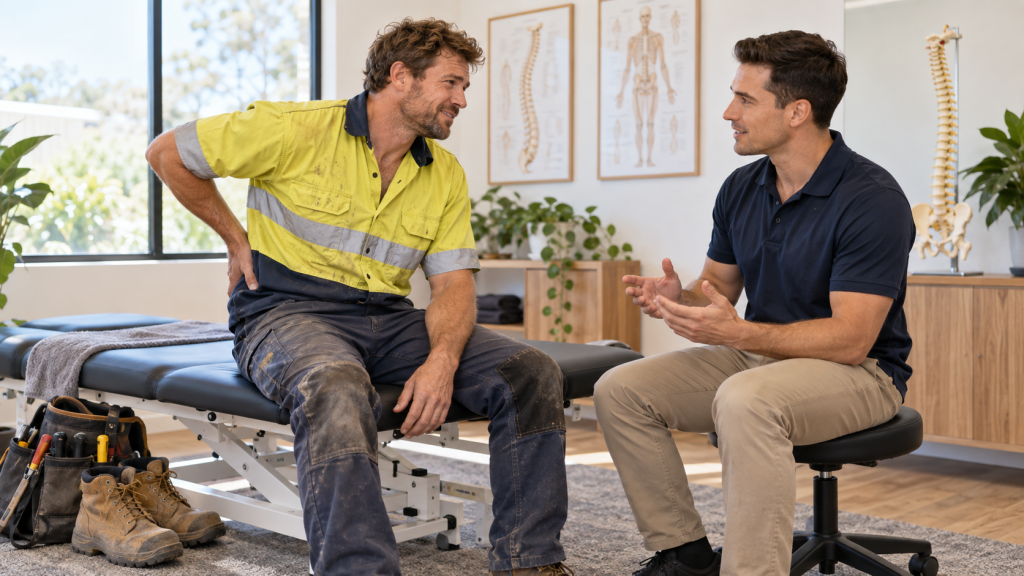


A running injuries chiropractor in Sydney may help with suitable muscle, joint and overuse pain. Care works best alongside sensible training-load changes, strength work, and referral when symptoms suggest a more serious problem.
Shin splints and IT band syndrome often develop when running demand exceeds current tissue capacity. Spinal Care provides assessment-based chiropractic care for runners at its Ingleburn and Kogarah Bay clinics. The aim is to understand the likely drivers of pain, not promise a quick fix.
This guide covers common causes, warning signs, examination, rehabilitation, footwear, and a gradual return to running. It also explains when urgent medical care matters more than hands-on treatment.
Key takeaways
Running injuries usually reflect several factors, including training load, recovery, strength, and running conditions. Shin pain and outer-knee pain need different checks and different rehabilitation plans. Chiropractic care may assist suitable cases, but it does not replace medical review for serious symptoms.
Running pain often starts when training load rises faster than the body can adapt.
Shin splints and IT band syndrome need specific assessment rather than a generic treatment plan.
Strength work, load changes, and a graded return to running form the main recovery plan.
Hands-on care may improve comfort or movement while active rehabilitation builds lasting capacity.
Localised bone pain, severe swelling, or sudden loss of strength needs prompt medical review.
Table of Contents
- Why do running injuries develop?
- Shin splints and IT band syndrome: symptoms, causes and warning signs
- How can a running injuries chiropractor in Sydney support recovery?
- Exercise rehabilitation and return-to-running plan
- Running injury prevention: load, footwear and early action
- In summary
- Frequently asked questions
Why do running injuries develop?
Running injuries develop when repeated running stress exceeds how much the body can currently tolerate. A running injuries chiropractor Sydney patients consult should consider training, recovery, strength, movement, and health rather than blaming one joint position.
Each stride loads the feet, ankles, calves, knees, hips, pelvis, and spine, and general guidance on chiropractic care for runners highlights how these repeated forces can affect multiple joints over time. Pain may follow a training change, poor recovery, an earlier injury, or several smaller issues occurring together. A running injuries chiropractor in Sydney should avoid claiming that every problem comes from “misalignment”.
Running load and recovery are common injury triggers
Running load and recovery commonly trigger pain when weekly kilometres, speed, hills, or frequency rise too quickly. Muscles, tendons, and bone adapt over time, but they can become sore when several demands rise in the same week. For example, adding hill repeats, a longer Sunday run, and an extra running day gives the body little time to adjust.
Poor sleep, low food intake, work stress, and too few easier days can also reduce recovery. A running injuries chiropractor Sydney runners visit may review these factors alongside symptoms. When returning after pain, change one training variable at a time, such as duration, speed, or hills.
The kinetic chain can change where running load goes
The kinetic chain describes how body parts share force during movement. Feet affect ankles, ankles affect knees, and hips, pelvis, and spine help guide the whole leg. Limited ankle movement may raise calf and shin load, while reduced hip control may increase outer-knee stress. A running injuries chiropractor Sydney runners trust should respect personal running styles rather than force one “perfect” technique.
Shin splints and IT band syndrome: symptoms, causes and warning signs
Shin splints and IT band syndrome usually cause pain in different areas and require different management. A running injuries chiropractor Sydney runners see can screen symptoms, modify aggravating load, and refer when bone or tendon injury seems possible.
Shin splints commonly affect the inner shin, while IT band syndrome often affects the outer knee. Both can worsen when runners push through changing symptoms. Early action may reduce time away from running.
What are shin splints and when could shin pain be more serious?
Shin splints often refer to medial tibial stress syndrome, which causes diffuse pain along the inner shin. A running injuries chiropractor Sydney patients consult may check recent kilometre increases, hard ground, footwear changes, calf capacity, and ankle movement. Symptoms often appear after a jump in distance, hills, or running frequency.
Pain that becomes sharply localised deserves more caution. Pain at rest, worsening pain while walking, or pain during hopping can suggest a bone stress injury rather than routine shin splints. Stop impact running and seek prompt review from a GP, sports physician, or another qualified clinician if these signs occur.
What is IT band syndrome in runners?
IT band syndrome is pain on the outer side of the knee during repeated bending and straightening. A running injuries chiropractor Sydney runners choose may hear that pain starts at a predictable distance, feels worse downhill, or flares on cambered roads. Recent training changes, reduced hip endurance, poor recovery, and terrain can all play a part.
The iliotibial band is a strong strip of connective tissue along the outer thigh. It does not need to be “broken up” to recover. Soft-tissue work may improve short-term comfort, but progressive hip, trunk, and leg strength remains the main way to rebuild running tolerance.
How can a running injuries chiropractor in Sydney support recovery?
A running injuries chiropractor in Sydney can support recovery through careful screening, hands-on care, exercise advice, and referral when needed. Chiropractic care should sit within an active plan rather than replace strength work, load management, or medical investigation.
This approach reflects evidence from a randomised controlled trial on musculoskeletal expert input into low back pain outcomes, where structured clinical assessment guided care decisions rather than routine hands-on treatment alone. Serious symptoms need a different care pathway.
What should a running injury assessment include?
A running injury assessment should review where pain occurs, when it began, and how it changes during and after a run. It should also cover recent training volume, pace, hills, surfaces, shoes, strength sessions, recovery, and running goals. Relevant checks may involve the spine, pelvis, hips, knees, ankles, feet, balance, and tasks such as calf raises or step-downs.
At Spinal Care, orthopaedic and neurological tests may help guide care for suitable presentations. AI-assisted posture analysis, digital X-ray, and MRI review may also be considered where clinically useful. Imaging is not needed for every injury and follows ALARA principles, meaning radiation exposure stays as low as reasonably achievable.
Chiropractic care should support active rehabilitation
Chiropractic care should support active rehabilitation by helping runners move, strengthen, and return to training gradually. Selected treatment may involve adjustments or joint mobilisation for the spine, pelvis, hips, knees, ankles, or feet. Myofascial release, trigger point work, dry needling, and sports taping may suit some people.
Gentle options such as Activator Methods® and drop-piece tables may suit reactive or sensitive presentations. Spinal Care combines hands-on treatment with targeted exercise and graded return-to-running plans. Suitable runners can book an assessment at the Ingleburn or Kogarah Bay clinic, while suspected fractures, major tendon tears, and serious nerve symptoms need referral.
Exercise rehabilitation and return-to-running plan
Exercise rehabilitation and return-to-running plans rebuild capacity through controlled loading. A running injuries chiropractor Sydney runners work with can help set a baseline, but progress depends on regular exercise and sensible training choices.
Complete rest is not always needed, although painful running may need to pause or reduce. Recovery should progress from daily movement to easy runs, then hills, speed work, and racing. Symptoms during activity and the following morning help guide each step.
Build strength and control for the injured area
Strength and control work should match the injured area, current ability, and running goal. Shin symptoms may benefit from straight-knee and bent-knee calf raises, foot-strength work, balance drills, and ankle mobility where movement is limited. IT band-related pain often responds well to gluteal strength, trunk endurance, step-downs, and single-leg squat control.
A running injuries chiropractor Sydney patients see may progress exercises from slow, controlled movements to hopping, faster loading, and running drills. Mild symptoms that stay stable can be manageable for some conditions. Worsening pain, limping, or a next-day flare means the load is too high.
Return to running by changing one variable at a time
Return to running works best when runners change one variable at a time. A tolerable baseline may involve walking, cycling, swimming, run-walk intervals, or easy jogging, depending on the diagnosis. A running injuries chiropractor Sydney runners consult can help decide whether these options suit their symptoms.
| Stage | Main focus |
|---|---|
| 1 | Build comfortable walking or low-impact exercise |
| 2 | Add short, easy run-walk sessions |
| 3 | Increase running duration before speed |
| 4 | Add hills, intervals, and race effort last |
Review symptoms during the session, later that day, and the next morning. Steep downhills, sprinting, track work, and racing place higher demand on the body. A useful goal may be completing a 20-minute easy run without a symptom flare the next day.
Running injury prevention: load, footwear and early action
Running injury prevention relies on gradual progression, regular strength work, recovery, and an early response to pain. A running injuries chiropractor Sydney runners see can provide guidance, but no treatment can remove every injury risk.
The best prevention plan fits the runner’s current workload and environment. Sydney roads, trails, hills, beaches, heat, and humidity all change running demand. Simple habits often matter more than dramatic changes.
Practical load management for Sydney runners
Practical load management means alternating harder sessions with easy runs, rest, or low-impact exercise. A running injuries chiropractor Sydney patients visit may suggest introducing hills, trails, soft sand, and speed sessions gradually. Sydney heat and humidity can raise physical strain, so slower pacing, extra fluids, and cooler training times may help.
Regular calf, foot, hip, and trunk strength work supports ongoing preparation. Watch for pain that appears earlier during runs, repeated stiffness, a changed stride, increasing stair pain, or soreness that remains between sessions. These signs call for a review of training before the problem becomes harder to settle.
Footwear, warm-ups and when to seek urgent care
Footwear should feel comfortable and suit the planned surface, but no shoe prevents every running injury. Move gradually into shoes with very different cushioning or heel height. Use brisk walking, easy jogging, and dynamic drills before hard sessions, as stretching alone cannot prevent injury.
Seek urgent care for inability to bear weight, obvious deformity, a sudden pop with loss of strength, major swelling, or bruising. Progressive numbness, bowel or bladder changes, fever, or severe unrelenting night pain also need urgent medical review.
In summary
Shin splints and IT band syndrome usually improve through load changes, progressive rehabilitation, and a careful return to running. A running injuries chiropractor Sydney runners consult may help with suitable musculoskeletal symptoms, movement checks, and hands-on care.
Recurring or limiting pain deserves a proper assessment. Spinal Care can discuss whether its evidence-informed, team-based approach suits the problem and refer when another health professional is needed.
Frequently asked questions
Running injury questions need practical answers, realistic expectations, and clear safety limits. Chiropractic care may help selected musculoskeletal problems, but it cannot replace medical care for serious injuries. The answers below explain common concerns before an appointment.
Can chiropractic care prevent every running injury?
No. Injury risk also depends on training load, recovery, strength, previous injury, general health, and running conditions. Chiropractic care may identify relevant movement issues and support rehabilitation for suitable cases. It cannot guarantee injury prevention.
Do runners need regular adjustments if they have no pain?
No, there is no universal need for regular adjustments without pain. Care should reflect individual goals, clinical findings, informed preference, and measurable benefit. A clinic should not pressure runners into long treatment plans without clear reasons.
Is running pain caused by a misaligned spine or pelvis?
No, running pain is more complex than spinal or pelvic alignment alone. Tissue load, strength, mobility, sleep, stress, and training history can all influence symptoms. A clinician should explain likely factors without reducing every problem to one cause.
Is a running assessment necessary for every injury?
No, a running assessment is not required for every injury. It can help when symptoms clearly occur during running or keep returning despite care. The goal is to find useful changes, not impose one ideal running style.
Can a chiropractor diagnose a stress fracture?
A chiropractor may identify warning signs and recommend referral, but a suspected stress fracture needs medical assessment. Imaging may be needed when focal bone pain persists or worsens. Avoid impact running while persistent localised pain is being assessed.
What should I bring to a running injury appointment?
Bring recent training details, footwear information, a symptom timeline, medical history, and details of past treatment. A short running video may help if it is safe and practical. Wear clothing that allows examination of the lower limb, pelvis, and spine.
Can I claim chiropractic care through private health insurance?
Australian extras cover varies between insurers. Rebates, waiting periods, annual limits, and provider rules differ, so check your policy before booking. Medicare access may only apply through specific eligible care pathways or referrals. Need help choosing your next step? Contact Spinal Care: https://spinalcare.com.au/contact/. Learn more about treatment options: https://spinalcare.com.au/chiropractic-treatment-for-back-and-joint-pain/. General health information: https://www.healthdirect.gov.au/chronic-pain. Learn more about chronic pain care: https://spinalcare.com.au/managing-chronic-pain/.