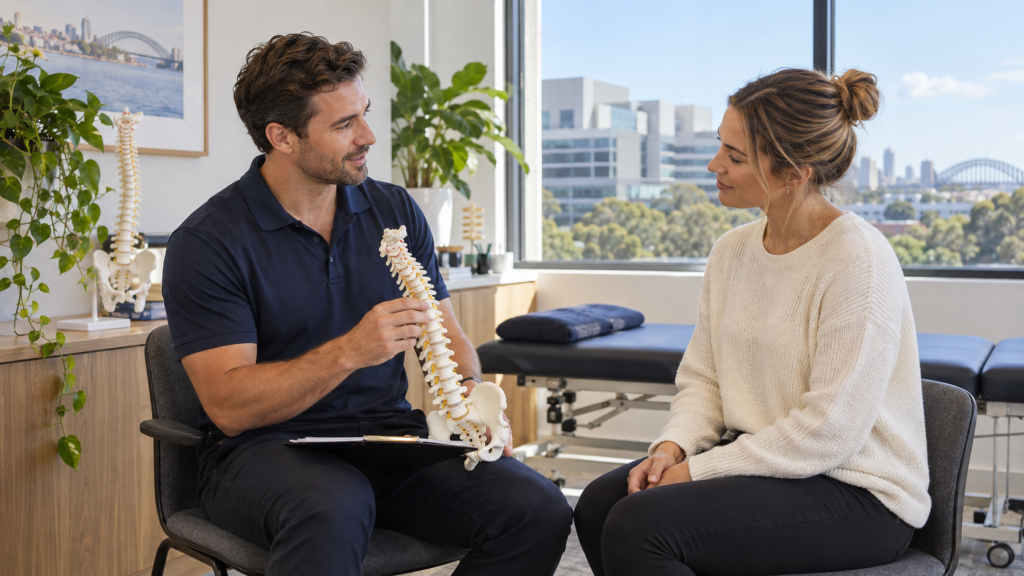


In Sydney, a St George sports injury chiropractor can assess many back, neck, joint and muscle problems, then guide active rehabilitation or arrange medical referral when needed. The right care depends on the injury, your health history, sport demands and any warning signs.
At Spinal Care, rugby league players, netballers and runners receive an assessment linked to their symptoms and goals. Care may include hands-on treatment, exercise, load changes and return-to-sport planning. Fractures, concussion, major tears and serious nerve symptoms need medical care first.
The sections below explain what an assessment involves, which injuries may suit conservative care, and when urgent help is needed.
Key takeaways
A St George sports injury chiropractor should assess the whole problem before treatment starts. Pain location alone rarely tells the full story. Training load, past injuries and movement control can all matter.
Assessment should guide the next step. A clinician checks what happened, what aggravates pain and what activity remains safe. Scans or medical review may be needed for some injuries.
Active rehabilitation matters as much as symptom relief. Strength, balance and sport skills help prepare the body for real training demands. Hands-on care works best as one part of that plan.
Load should rise gradually after injury. Large jumps in running distance, sprint work or match minutes can exceed current tolerance. The response over the next 24 hours helps guide progress.
Return to sport needs sport-specific checks. A runner needs repeated impact tolerance, while a netballer needs safe landing and pivoting. Rugby league players may also need contact preparation.
Serious symptoms need prompt medical review. Concussion, suspected fracture, worsening weakness and loss of bladder control are not routine chiropractic problems. Call Triple Zero (000) for emergencies.
Table of Contents
- How does a sports injury assessment identify the right next step?
- Which rugby league, netball and running injuries may benefit from chiropractic care?
- How does Spinal Care support rehabilitation and return to sport?
- When should a sporting injury be assessed urgently?
- In summary
- Frequently asked questions
How does a sports injury assessment identify the right next step?
A sports injury assessment identifies the right next step by separating common musculoskeletal pain from injuries that need medical care, consistent with a randomised controlled trial on musculoskeletal expert input for low back pain outcomes. A St George sports injury chiropractor should assess symptoms, movement, strength, nerve signs and training demands before recommending treatment. This helps identify safe activity, useful rehabilitation targets and reasons for referral. Pain in one area may also relate to an old injury, poor recovery, work demands or a recent rise in training.
What happens at a sports injury chiropractic appointment?
A sports injury chiropractic appointment should begin with a detailed history, then move to physical and neurological checks. At Spinal Care, this includes a five-step review of the injury, playing position, workload changes, work demands, previous injuries, concussion history and recovery goals.
The examination may check joint motion, muscle strength, balance, nerve function and sport movements such as squatting, hopping or turning. X-ray or MRI review is not routine, but may help when clinically justified. X-rays should be used under ALARA principles, which aim to limit radiation exposure.
The appointment should finish with plain-language findings, treatment choices, risks, alternatives and measurable goals. You should understand why a treatment is being suggested, what you can do between visits and when further medical assessment would be appropriate.
Why do sports injuries keep coming back?
Sports injuries often return when pain settles before strength, balance or sport tolerance returns. A St George sports injury chiropractor should look beyond the sore area and review workload, movement control, sleep, recovery and past injuries.
Knee pain may relate to low hip strength or reduced ankle movement, while Achilles pain may follow new hills or speed sessions. Back pain can flare after heavier lifting, extra gym work or long periods at a desk. Pain relief is useful, but it does not always mean the body is ready for full training.
A gradual return matters because tissues adapt to load over time. An athlete who can jog without pain may not yet be ready for repeated sprints, hard tackles, high-volume jumping or a full match.
Which rugby league, netball and running injuries may benefit from chiropractic care?
Rugby league, netball and running injuries may respond to chiropractic care when they involve suitable muscle, joint or spinal problems. A St George sports injury chiropractor may help improve movement, manage pain and support rehabilitation alongside exercise and medical care where needed. Care is not a substitute for treatment of fractures, dislocations, major ligament tears, concussion or acute nerve problems. The sport matters because each activity places different stress on the body, a pattern also seen in a cross-sectional survey of sports injury management by osteopaths involving nearly 1,000 practitioners.
Rugby league and netball injuries: contact, landing and change of direction
Rugby league and netball injuries often involve contact, landing, pivoting and sudden changes of direction. Rugby league players may develop neck or back pain, shoulder symptoms, knee injuries, ankle sprains, hamstring strains and contact-related soreness. Netballers often report ankle sprains, patellar tendon pain, calf strains and knee pain after repeated jumping or stopping.
Manual therapy, gentle mobilisation, soft tissue work, dry needling or taping may provide short-term symptom relief for selected people alongside strength and balance work. These approaches should support, rather than replace, a progressive exercise plan. Activator Methods and drop-piece tables can offer lower-force care for younger athletes, veteran players or people who prefer gentler treatment.
Suspected concussion requires immediate removal from play and medical assessment. An athlete should not return to training or competition on the same day after a suspected concussion.
Running injuries: managing repeated load through the back and lower limb
Running injuries usually build through repeated load rather than a single collision. A St George sports injury chiropractor may assess lower back pain, hip pain, knee pain, calf strains, Achilles tendon pain, plantar heel pain and recurring ankle symptoms.
Extra distance, hills, speed sessions, hard surfaces or different shoes can exceed current tissue tolerance. A useful examination reviews hip and glute strength, calf capacity, balance, joint motion and the runner’s weekly programme. It should also consider recent changes such as a return after illness, reduced sleep, a new job with more standing, or compressed training before an event.
Non-surgical spinal decompression with the Spine MT Core system may suit carefully screened people with disc-related lower back pain or sciatica, an approach reflected in research on longer-term chiropractic care outcomes for military personnel with low back pain. It is not appropriate for every cause of back or leg pain, so clinical assessment and referral where needed remain important. Suspected stress injury, sudden loss of push-off strength, major swelling or worsening nerve symptoms need prompt medical review.
How does Spinal Care support rehabilitation and return to sport?
Spinal Care supports rehabilitation and return to sport through hands-on care, exercise, education and graded sport tasks. A St George sports injury chiropractor should base progress on function, strength, confidence and symptom response rather than a fixed number of days. Early care may reduce painful movement and help maintain safe activity. Later care should prepare the person for the actual demands of training, work and competition.
Build capacity before returning to full training
Building capacity before full training means increasing what the injured area can safely do over time. Complete rest is not always useful, since safe walking, cycling or modified gym work can maintain fitness. Rehabilitation often starts with basic movement, then adds core stability, hip and glute strength, balance and control.
Exercises can progress to running, jumping, sprinting, cutting, tackling preparation or repeated landing tasks. A 24-hour symptom check helps guide the pace. More pain, swelling, weakness or altered movement the next day may show that the load rose too quickly.
A practical progression may include:
Daily activities and basic gym movements that are comfortable.
Controlled sport movements, such as light jogging, passing drills or low-height landing practice.
Higher-speed, higher-volume or more unpredictable drills.
Modified training before full training and competition.
Home exercises help people manage recovery without reliance on passive treatment. The goal is not simply to feel better after an appointment; it is to tolerate the activities that matter to you.
Return-to-sport planning with coaches and health professionals
Return-to-sport planning should move from modified activity to drills, partial training, full training and then competition. A St George sports injury chiropractor can work with GPs, physiotherapists, sports physicians, podiatrists and coaches when the injury needs shared care. Chiropractors are not the primary providers for ACL reconstruction, fractures, dislocations, concussion or acute neurological conditions.
Useful coach communication covers:
Current restrictions and safe alternatives
Tolerated drills and training volume
Changes to running, jumping, contact or match minutes
Symptoms that require the athlete to stop and seek review
The planned timing of reassessment
Fear of movement can also delay recovery, especially after a serious sprain or painful back episode. Clear education and graded exposure can rebuild trust in movement without ignoring symptoms.
When should a sporting injury be assessed urgently?
A sporting injury needs urgent assessment when symptoms suggest serious trauma, nerve involvement, concussion or a major tendon injury. A St George sports injury chiropractor should use red flag screening and refer when chiropractic care is not the right first step. Do not wait for a standard appointment after a high-impact accident with severe symptoms. Early medical assessment can rule out problems that need urgent treatment.
Red flags after contact, falls or sudden severe pain
Red flags after contact, falls or sudden severe pain need medical assessment rather than manual therapy alone. Spinal Care refers people with warning signs to the right medical service. The table below lists symptoms that require urgent action.
| Warning sign | Why urgent review matters |
|---|---|
| Suspected fracture, deformity or inability to bear weight | A broken bone, severe ligament injury or dislocation may need imaging and urgent treatment. |
| Rapid swelling, locked joint or repeat dislocation | These symptoms can point to significant joint damage that needs medical review. |
| Sudden Achilles or calf pain with loss of push-off | This can indicate a tendon rupture and should not be treated as a simple strain. |
| New weakness, spreading numbness or saddle numbness | Nerve symptoms, loss of coordination, bladder changes or bowel changes need urgent assessment. |
| Confusion, seizure, repeated vomiting or worsening headache | These may be signs of concussion or a more serious head injury. Call Triple Zero (000) for emergencies. |
In summary
A St George sports injury chiropractor can play a useful role in evidence-based assessment, movement support, rehabilitation and return-to-sport planning. The best plan links treatment to your injury, training load and practical goal, whether that means running comfortably, playing netball or returning to rugby league.
Seek help early when pain keeps returning or training becomes limited. Ask how progress will be measured and which activities remain safe. Contact us to discuss whether an assessment at Spinal Care is suitable for your symptoms and sporting goals.
Spinal Care can assess suitable musculoskeletal concerns and develop a practical plan, while arranging medical referral when warning signs appear.
Frequently asked questions
These common questions about a St George sports injury chiropractor cover treatment safety, recovery, exercise and access to care. Answers should support informed choices, not replace an individual assessment. Urgent symptoms always need medical review.
Can a chiropractor help with sciatica from sport?
Yes, some people with sport-related sciatica may benefit from careful conservative care and exercise rehabilitation. Sciatica describes leg symptoms linked to nerve irritation, often from the lower back. Progressive weakness, saddle numbness, or bladder and bowel changes require urgent medical assessment.
Are chiropractic adjustments safe for sports injuries?
Chiropractic adjustments may be suitable for some injuries after a proper history and examination. Safety depends on the injury, health history, findings and personal preference. Spinal Care can discuss adjustment, mobilisation and lower-force options, along with risks, alternatives and your right to decline any technique.
How many chiropractic appointments will I need for a sports injury?
The number of appointments varies with injury type, severity, sport demands and your response to rehabilitation. A minor strain may need less support than persistent tendon pain or back symptoms. Reviews should measure function and change the plan if progress is limited.
Can I claim chiropractic care through Medicare or private health insurance?
Routine chiropractic care is generally not covered by Medicare. Some eligible people with a Medicare Chronic Disease Management plan may access subsidised allied health services where clinically appropriate, though bulk billing is not guaranteed and referral requirements apply. DVA card holders may also have access options. Confirm private health cover, referral rules and fees directly before booking.
Should I stop all exercise while recovering from a sports injury?
No, complete rest is not always needed for uncomplicated sports injuries. Modified activity can often maintain fitness without causing a concerning symptom flare-up. The right activity depends on the diagnosis, injury stage and any medical advice.
Can older athletes see a sports injury chiropractor?
Yes, older athletes can be assessed with arthritis, osteoporosis, medication and general health history considered. Gentle mobilisation and lower-force methods may suit some people. A GP or specialist may also need to contribute when health risks or complex conditions are present. Need help planning a safe return to sport? Contact Spinal Care: https://spinalcare.com.au/contact/. Learn more about sports injury rehabilitation: https://spinalcare.com.au/managing-chronic-pain/. General health information: https://www.healthdirect.gov.au/chronic-pain.