

Foot posture and lower back pain can be linked when the way your feet load, move or hurt changes your walking pattern. Changes can travel from the foot through the ankle, knee, hip, pelvis and lower back. However, foot shape alone does not prove the cause of back pain, and a low or high arch is not automatically a problem.
Flat feet, high arches, worn shoes and uneven shoe wear may matter for some people. Back pain can also relate to the spine, nerves, work demands, sleep, past injury, stress, or a sudden increase in activity.
Spinal Care considers these connected factors through an evidence-based whole-body review. The sections below explain gait, footwear, strength work, clinical assessment and signs that need prompt medical advice.
Key takeaways
Foot posture is only one possible contributor to lower-back pain.
Foot movement can affect loading through the legs, pelvis and spine.
A painful limp may place extra strain on the lower back.
Shoes and orthotics should suit symptoms, activity and comfort.
Strength, balance and gradual load increases often matter more than arch appearance.
Numbness, weakness and bladder or bowel changes need prompt medical review.
Table of Contents
- How can foot posture contribute to lower back pain?
- Which foot patterns and gait changes may affect your back?
- When should foot and lower back symptoms be assessed?
- What does an integrated foot and back assessment involve?
- Managing foot posture and lower back pain safely
- Frequently asked questions
- In summary
How can foot posture contribute to lower back pain?
Foot posture can contribute to lower back pain when altered foot movement changes gait and loading above the ankle, a relationship examined in a systematic review of lower limb alignment and low back pain that analysed evidence linking lower-extremity misalignment to back pain risk. The link works through the kinetic chain, yet the visible height of an arch does not diagnose the source of symptoms. Pain usually reflects several factors, including movement habits, work demands, fitness, past injury and how much load the body currently tolerates.
For example, foot pain may cause someone to shorten their stride or shift weight away from one side. That change can alter how the calf, hip and lower-back muscles work during walking. At the same time, lower-back pain can change gait and foot loading, so the relationship can work in either direction.
The foot–leg–pelvis–spine kinetic chain
The foot–leg–pelvis–spine kinetic chain describes linked movement from the ground to the lower back. When your foot lands, it adapts to the surface and absorbs load. As you push off, the foot becomes firmer to help move you forward, while the ankle, knee, hip and pelvis adjust around it.
If one area repeatedly moves differently, lower-back muscles and joints may work harder, which can contribute to fatigue, stiffness or discomfort. The reverse can also happen: lower-back pain may shorten your stride, reduce hip movement or change how each foot loads the ground.
Normal movement variation is common. One foot may roll in more than the other, or one hip may feel tighter after a previous injury, without causing pain. Assessment is more useful when the movement pattern matches symptoms, limits daily tasks or has changed recently.
Why foot shape alone does not diagnose back pain
Foot shape alone does not diagnose back pain because many people with low or high arches have no symptoms. A more useful question is what happens during walking, standing, running, squatting and single-leg balance.
For example, a person may feel comfortable at home but develop lower-back fatigue after a long shift on concrete floors. In that situation, shoe comfort, tired calf muscles, workload, sleep, stress and reduced strength may all play a part. A foot posture seen while standing still offers only part of the picture.
It is also worth remembering that arches naturally change shape during weight-bearing. A flexible flat-looking foot is not necessarily weak or injured, and a high arch is not necessarily rigid. Symptoms, function and the way the body responds to load are more relevant than appearance alone.
Which foot patterns and gait changes may affect your back?
Foot patterns and gait changes may affect your back when they repeatedly alter force through the legs and pelvis. Over-pronation, rigid high arches and pain-related limping can create different loading patterns. Neither pattern automatically causes symptoms, yet each may be worth reviewing when pain follows standing, walking or impact exercise.
A recent change is often more relevant than a long-standing feature. New foot pain, a changed work schedule, a different pair of shoes or a rapid return to running may place more demand on tissues that have not had time to adapt.
Over-pronation, flat feet and high arches
Over-pronation, flat feet and high arches can change how the body manages load during each step. Pronation is the normal inward roll that lets the foot adapt to the ground. More inward rolling than expected may occur alongside lower-leg rotation and altered pelvic movement, although this does not automatically mean injury.
Supination is the normal outward movement that helps make the foot firm for push-off. A rigid high arch may absorb less impact, particularly during running or walking on hard ground, and research on surface inclination and gluteal activation has examined how standing and walking surfaces influence lumbar lordosis and foot pronation in people with extension-pattern low back pain. Some people notice symptoms after long periods standing, running, or wearing shoes with limited cushioning or support.
A clinician will usually consider more than pronation or arch height, including:
Foot and ankle range of motion
Calf flexibility and strength
Hip control and leg strength
Walking speed, stride length and step width
Previous foot, ankle, knee, hip or back injuries
Current work, sport and daily activity demands
Can foot pain change the way you walk?
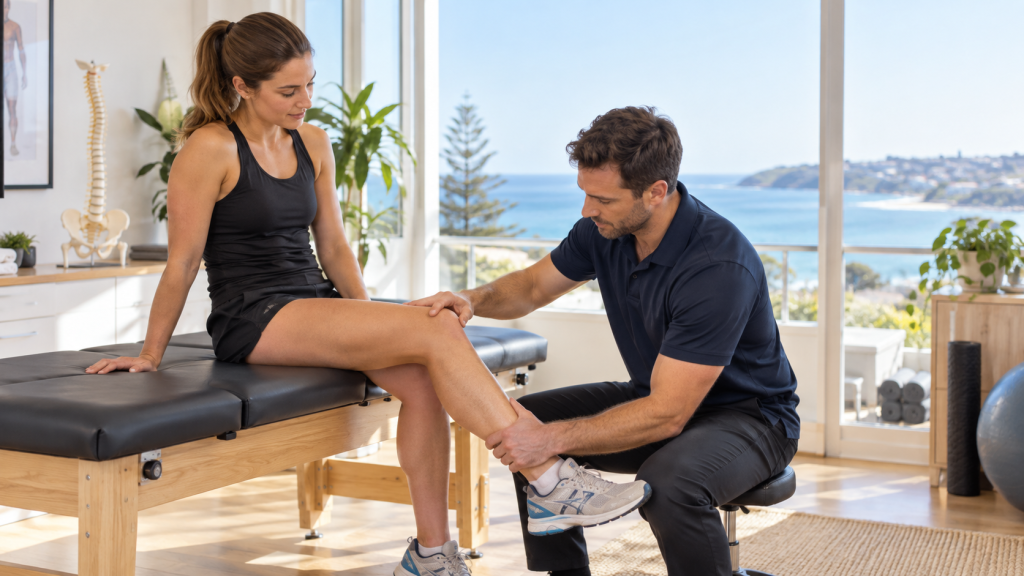
Foot pain can change the way you walk more than foot posture alone. Heel, forefoot, tendon or ankle pain may cause limping, shorter steps, toe walking or turning the foot outward. Repeating this guarded pattern can load the calf, hip, pelvis and lower back unevenly.
Consider which came first: the foot pain, the altered walking pattern or the back pain. That order can guide care. For instance, treating a painful heel or ankle problem may help a limp settle, while back assessment may take priority if leg symptoms began in the lower back and travel downwards.
Avoid pushing through a clear limp for weeks. Continuing normal activity is often helpful for uncomplicated back pain, but activity may need adjustment when walking becomes increasingly painful or noticeably uneven.
When should foot and lower back symptoms be assessed?
Foot and lower back symptoms should be assessed when they persist, repeat or affect normal walking and daily tasks. Patterns linked with shoes, surfaces and standing may suggest a load issue, while nerve signs need a different response. A clear history helps separate a possible foot contribution from pain mainly driven by the lumbar spine.
Early assessment can be useful after a significant foot or ankle injury, especially if you have not returned to a normal walking pattern. It may also help if pain is limiting work, sleep, exercise or confidence in movement.
Signs that your feet may be part of the problem
Signs that your feet may be part of the problem include back pain after standing, walking, running or long work shifts. Symptoms that change with footwear, surface type, walking distance or lower-impact activity can also offer helpful clues.
One-sided foot, calf, knee, hip and back discomfort, especially after a foot or ankle injury, deserves attention, since large population research from the Framingham Foot Study has linked foot posture and function with low back pain. Keep a short diary of activity, shoes, surfaces, pain location and timing before an appointment. This can make patterns easier to identify.
| Pattern to note | What it may help show |
|---|---|
| Pain after hard floors | A possible link between prolonged loading and symptoms |
| New limp after foot pain | A protective gait that may strain other areas |
| Different shoe wear | Uneven loading worth reviewing, not proof of cause |
| Pain after longer walks | A possible limit in current load tolerance |
| Symptoms after a new shoe or training change | A change in demand that may need a slower transition |
When do you need prompt medical advice?
Prompt medical advice is needed when lower-back pain travels down the leg with numbness, pins and needles, burning or weakness. New difficulty lifting the foot, worsening balance or progressive leg weakness can indicate nerve involvement from the back.
Seek urgent medical care for:
New bladder or bowel changes
Numbness around the saddle area
Severe trauma
Fever or feeling acutely unwell alongside back pain
Rapidly worsening weakness or loss of coordination
Persistent or worsening pain that disrupts sleep, work, walking or exercise also warrants clinical review. Most back pain is not caused by a serious condition, but new neurological symptoms should not be managed with footwear changes or exercises alone.
What does an integrated foot and back assessment involve?
An integrated foot and back assessment examines how the feet, legs, pelvis and spine work together. It looks beyond arch height to identify painful movement, reduced capacity, nerve signs and load patterns. The aim is not to force a perfect posture, but to identify practical changes that may help you move with more comfort.
Assessment should also consider your goals. Someone preparing for a fun run may need a different plan from a person who stands all day at work or an older adult who feels less steady on uneven ground.
Looking beyond the arch
Looking beyond the arch means reviewing symptoms, injuries, work demands, exercise changes and footwear alongside movement. A clinician may observe standing posture, gait, stride length, foot loading and side-to-side differences.
They may also check foot and ankle motion, calf and hip strength, balance, pelvic control and lumbar movement. When leg pain, tingling, numbness or weakness is present, orthopaedic and neurological checks can help identify whether the spine or nerves need priority care.
Scans are not routinely needed for every case of back or foot pain. Imaging is generally considered when it is likely to change management, when symptoms suggest a more serious condition, or when recovery is not progressing as expected.
Spinal Care’s whole-body assessment approach
Spinal Care’s whole-body assessment approach includes biomechanical and gait review to examine foot mechanics and broader loading patterns. Its bio-psychosocial model also considers sleep, stress, work habits and lifestyle, since pain rarely has a single cause.
AI-assisted posture analysis may be used to record postural changes over time. Digital X-rays or postural scans should only be used when clinically indicated and under the ALARA principle, which means radiation exposure is kept as low as reasonably achievable. Diagnostic triage then helps decide whether care, referral or further investigation is the right next step.
Referral may be appropriate for a GP, physiotherapist, podiatrist, sports physician, orthopaedic specialist or another practitioner, depending on the findings. This is particularly relevant for suspected fractures, inflammatory conditions, progressive nerve symptoms, severe foot deformity or pain that does not respond to initial care.
Managing foot posture and lower back pain safely
Managing foot posture and lower back pain safely usually involves gradual changes rather than a quick fix. Comfortable footwear, activity changes, exercise and targeted support may help when matched to the person’s symptoms and goals. If pain worsens, spreads or limits normal function, the plan needs review rather than more forceful self-treatment.
A useful approach is to make one or two changes at a time. Changing shoes, adding orthotics, increasing exercise and starting a new treatment in the same week can make it difficult to know what is helping or aggravating symptoms.
Footwear, orthotics and activity changes
Footwear, orthotics and activity changes can reduce aggravating load without claiming to cure back pain. Choose shoes with enough width, secure fastening, suitable grip and cushioning where it feels helpful. Replace pairs that are visibly worn, unstable or compressed.
Introduce major shoe changes gradually, especially when moving to a much firmer, softer or flatter design. Custom orthotics may help redistribute load for selected people, but they should support rehabilitation rather than replace strength work or assessment.
Shorter walks, regular movement breaks, task rotation and a staged return to running can help settle load-related symptoms. Hard work surfaces and sudden increases in training are common triggers.
A simple progression may look like this:
Reduce the aggravating activity enough to settle symptoms.
Maintain comfortable movement, such as short walks or lower-impact exercise.
Build duration, distance or intensity in small steps as comfort returns.
Reassess if pain is increasing from week to week or new symptoms appear.
Strength, mobility and personalised care
Strength, mobility and personalised care can help the body tolerate everyday load from the feet to the spine. Rehabilitation may include foot and ankle control, calf strength, balance, hip strength, trunk endurance and walking practice. The goal is better movement capacity, not holding the foot in a rigid position throughout the day.
Exercises should be selected according to symptoms and ability. Examples may include controlled calf raises, supported single-leg balance, gentle foot-strength work, sit-to-stands, hip strengthening and gradual walking practice. Pain during exercise is not always harmful, but sharp, escalating or lingering symptoms should be discussed with a clinician.
Spinal Care may prescribe rehabilitation exercises for foot and ankle stability, mobility and movement higher in the kinetic chain. Soft tissue therapy or myofascial release may help with local tension around the foot and ankle where clinically suitable. Gentle, low-force chiropractic care, including Activator Methods and drop-piece tables, may form part of an individual plan.
Computer-controlled spinal decompression using Spine MT-Core may be considered for selected people with disc bulges, chronic lumbar pain or sciatica without red flags. It is not suitable for every cause of pain, so screening comes before treatment. Review any support, exercise or treatment that causes increasing pain, new weakness or other concerning symptoms.
Frequently asked questions
Foot posture and lower back pain questions often centre on arches, supports and footwear choices. Symptoms and function matter more than how a foot looks when standing still. These short answers offer safe starting points, not a personal diagnosis.
Can flat feet cause lower-back pain?
Flat feet may contribute to lower-back pain when movement under load matches a person’s symptoms. Many people with flat feet have no pain at all. Gait, strength, activity levels, footwear and spinal health also affect whether symptoms develop.
Can high arches cause back pain?
High arches may contribute when a rigid foot absorbs less impact during walking or running. Symptoms may be more noticeable on hard surfaces or in unsuitable shoes. A high arch alone does not prove that it causes back pain.
Should I buy arch supports for back pain?
Arch supports may help if altered foot loading contributes to pain or a limp. They should feel comfortable and be introduced gradually. Seek assessment if symptoms persist, worsen or include numbness or weakness.
Will correcting my foot posture cure my back pain?
Correcting foot posture will not always cure back pain because several factors may contribute. Better foot comfort and gait may reduce strain for some people. A care plan may also need to address the spine, hips, activity load and sleep.
Is walking barefoot good for foot posture and back pain?
Barefoot walking is not always helpful or harmful. Hard surfaces, current pain, foot strength and past activity affect tolerance. Increase barefoot time gradually and reduce it if symptoms rise during or after walking.
Why does my back hurt more after standing at work?
Long periods standing, hard floors, tired feet, worn shoes and few movement breaks can raise lower-back load. Back pain may also come from causes unrelated to the feet. Seek assessment when this pattern repeats or limits work.
In summary
Foot posture and lower back pain can be connected through gait and loading, but foot posture rarely explains every symptom on its own. Notice when pain occurs, address a painful limp, review footwear, and build strength and activity gradually.
Seek prompt medical advice for numbness, weakness, balance changes, bladder or bowel changes, or saddle-area numbness. Persistent foot, leg, hip or lower-back pain deserves a whole-body review.
Spinal Care can assess linked movement patterns and help identify whether the feet, spine, nerves, activity demands or several factors are involved. Need help choosing your next step? Contact Spinal Care: https://spinalcare.com.au/contact/. Learn more about treatment options: https://spinalcare.com.au/chiropractic-treatment-for-back-and-joint-pain/. General health information: https://www.healthdirect.gov.au/chronic-pain. Learn more about chronic pain care: https://spinalcare.com.au/managing-chronic-pain/.